


A good disc golf bag does more than hold your discs. It keeps your gear easy to reach, helps you stay organized, and makes each round feel a little smoother. That matters whether you are heading out for a relaxed local game or packing for a tournament. When your bag is set up well, it is easier to grab the right disc, keep your gear protected, and avoid dragging around things you will not use. Here is a simple way to organize your disc golf bag so it works better on the course.
How to Keep Your Disc Golf Bag Organized Over Time
A disc golf bag can stay organized for a while after one good cleanout, but keeping it that way usually comes down to a few small habits after each round.
Reset Your Bag After Every Round
One of the easiest ways to keep your bag under control is to do a quick reset when you get home. Put your discs back where they belong, throw away any rubbish, and take out anything you added for just that round. It only takes a couple of minutes, but it stops the mess from slowly building up.
Stop Carrying Things You Never Use
Most players end up with a few items in their disc golf bag that made sense at one point but never really get touched. Old scorecards, extra minis, random wrappers, spare gear, and discs you do not throw anymore all add weight and take up space. Every now and then, it helps to look through your bag and ask what actually needs to stay.
Keep Your Disc Setup Consistent
It is easier to stay organized when your discs have a regular place in the bag. If you keep changing where everything goes, it becomes harder to find the right disc quickly during a round. A simple system, like keeping putters together, mids together, and drivers in their usual order, makes the bag feel more familiar every time you play.
Adjust Your Bag as Your Game Changes
Your bag should not stay exactly the same forever. As your game improves, you may start using different molds, carrying fewer backups, or adding discs for certain shots and conditions. It is worth checking in once in a while to make sure your setup still matches how you actually play, not how you used to play months ago.
Clean the Bag Before It Gets Out of Hand
Dirt, wet towels, old snacks, and loose gear can build up faster than most players expect. A quick clean every so often keeps the bag from getting cluttered and helps your gear stay in better shape. It also makes it easier to notice what is useful, what is missing, and what has just been sitting there for no reason.
How to Choose the Right Disc Golf Bag
Choosing the right disc golf bag comes down the gear you are carrying. It is also about comfort since you are carrying this across the entire disc golf course.
Match the Bag to Your Playing Style
Start with the kind of rounds you usually play. A casual player who heads out for a quick nine holes does not need the same setup as someone playing long weekend rounds or entering tournaments. Smaller shoulder bags can work well for lighter carry and shorter sessions. Backpack-style bags usually make more sense for players who want extra discs, more storage, and better support during longer days on the course.
Think About How Many Discs You Actually Carry
It helps to be honest here. Many players buy a bigger bag than they need, then fill it with discs they rarely throw. That can leave the bag feeling heavier and more cluttered than it needs to be. If you only rotate through a small group of putters, midranges, and drivers, a compact bag may suit you better. If you have backups and extra gear, then a larger disc golf bag will probably be the better fit.
Prioritize Comfort Over Storage
Storage matters, but comfort matters more once the round gets going. Padded straps and a balanced weight, along with a shape that sits well on your back or shoulder, can make a big difference. This becomes even more important if you play hilly courses, walk long distances, or carry water, towels, snacks, and layers in addition to your discs.
Check the Pocket Layout
A good disc golf bag should make it easy to reach the things you use most. Look at how the bag handles water bottles, valuables, towels, minis, and quick-grab items like your phone or scorecard. Some players also want a separate putter pocket, while others prefer using that space for personal items. The best layout is the one that makes sense for your habits, not just the one with the most compartments.
Consider the Conditions You Usually Play In
Course and weather conditions should shape your choice more than people realize. If you often play in hot weather, easy access to water and a lighter bag can matter a lot. If your rounds often involve wet grass, mud, or colder mornings, you may want extra room for towels, socks, and a jacket. A bag with better structure and stronger materials can also hold up better if you play often or deal with rough terrain.
Leave Room for Your Game to Grow
Your bag should fit where your game is now, but it should also make sense six months from now. New players often start simple, then slowly add molds, accessories, and extra gear as they learn what they like. That does not mean you need the biggest bag available, but it does mean you should think a little ahead. A disc golf bag that gives you some extra flexibility can save you from needing to replace it too soon.

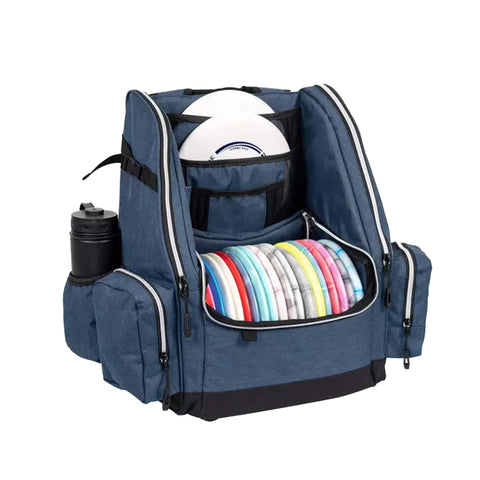
Types of Disc Golf Bags
There is a wide range of disc golf bags built for casual or professional play. To help you with your choice, below are the available bag options at the Flying Disc Store:
-
Backpack Bags: Backpack bags are a popular choice because they give you plenty of space without feeling too awkward to carry. They are a good fit for players who bring a full set of discs along with water, towels, snacks, and extra layers.
-
Starter Bags: Starter bags are great for newer players since they are lighter and easy to manage. A starter bag often makes more sense when you just have a few discs.
-
Shoulder Bags: Shoulder bags work well for players who want something light and straightforward. They are easy to grab and go with, and they suit shorter rounds or smaller disc collections. This style can also appeal to players who do not want the bulk of a full backpack.
-
Waist Bags: Waist bags are a lighter option for players who only want to carry a few discs and a couple of small essentials. They can be useful for quick rounds, practice sessions, or courses where you want to move around without carrying too much. For some players, that simpler setup just feels easier.
-
Tournament Bags: Tournament bags are made for players who like having more discs and more gear with them on the course. They usually have the space and structure to handle longer rounds, competitive play, and all the little extras that come with being more prepared. The tradeoff is that once they are packed out, they can start to feel pretty heavy.
-
Practice Bags: Practice bags are useful when you are heading out for fieldwork and want a bigger stack of discs in one spot. They are not really about carrying comfort for a full round. They are more about making practice easier when you are repeating shots, working on form, or throwing the same disc again and again.
-
Satchel or Slim Bags: When you need a lighter bag that can carry more than a few discs, satchel or slim bags are the next best option. They can hold onto your essential discs and other items. These bags are suited for casual play.

A Method To The Madness
A good disc golf bag should account for what your session will be. The right choice comes down to the ergonomic factor of the bag for comfort or the capacity for the discs you are carrying. Once you find a setup that fits your style and keep it organized with a few simple habits, your bag becomes a lot more useful from round to round. The best bag accounts for everything you need for the disc golf game.
Let us know in the comments below how you like to keep your bag functional.Visit our online store now Flying Disc Store!


